Tsunaihaiya: Complete Guide to Tsunamis, Hawaii Warnings, Japan Earthquakes, Safety, and Scientific Facts
The keyword tsunaihaiya has recently appeared in online searches, leaving many people wondering about its meaning. Unlike established scientific terms, tsunaihaiya does not currently have an official definition in geology, meteorology, or emergency management. Instead, it appears to be a search phrase connected with topics such as tsunami, Hawaii tsunami warning, Japan tsunami, tsunami advisory, and tsunami monitoring.
In many cases, unusual keywords become popular because of social media, typing errors, viral trends, or search engine suggestions. Although tsunaihaiya itself is not an official disaster term, it is closely associated with genuine concerns about tsunami preparedness and public safety.
This guide explains everything you need to know about tsunamis using clear, easy-to-read language. Whether you searched for tsunaihaiya, tsunami warning today, hawaii tsunami update, or Japan earthquake tsunami warning, this article provides reliable and educational information based on modern science.
By the end of this guide, you will understand:
- What the keyword tsunaihaiya likely refers to
- What a tsunami is
- How tsunamis develop
- Why Hawaii and Japan experience frequent tsunami alerts
- How tsunami monitoring systems work
- How to stay safe during tsunami emergencies
- Common myths and facts about tsunami hazards
What Is Tsunaihaiya?
Currently, tsunaihaiya is not recognized as an official scientific, geographic, or emergency management term.
Instead, it appears to be an internet search phrase that combines words associated with:
- Tsunami
- Hawaii
- Tsunami warnings
- Japan earthquakes
- Pacific Ocean disasters
People searching this keyword are usually looking for information about:
- Hawaii tsunami
- Tsunami warning Hawaii
- Tsunami advisory
- Tsunami today
- Pacific tsunami
- Japan tsunami warning
- Earthquake tsunami warnings Hawaii
As online search behavior changes, new phrases sometimes emerge from typing mistakes, speech-to-text recognition, or viral discussions. Understanding the actual science behind tsunamis is far more important than focusing on the unusual keyword itself.
What Is a Tsunami?
A tsunami is a series of large ocean waves caused by a sudden movement of water.
Unlike normal waves created by wind, tsunami waves result from powerful underwater events such as:
- Earthquakes
- Underwater volcanic eruptions
- Landslides
- Glacier collapse
- Rare meteor impacts
A tsunami can travel across entire oceans at incredible speeds before reaching land.
Many people think a tsunami is one giant wave. In reality, a tsunami usually consists of several waves arriving over many hours.
Featured Snippet: What Causes a Tsunami?
A tsunami forms when a large amount of ocean water is suddenly displaced. This usually happens because of a strong underwater earthquake but can also result from volcanic eruptions, landslides, or other major geological events. The displaced water spreads outward in every direction as powerful waves.
How Do Tsunamis Form?
Understanding how tsunamis develop helps explain why some earthquakes create destructive waves while others do not.
ALso Read: Startup Booted: The Complete Guide to Building a Successful Business Without Venture Capital
The process happens in several stages.
Step 1: An Underwater Earthquake Occurs
Most tsunamis begin beneath the ocean floor.
When tectonic plates suddenly move, the seafloor can rise or fall several feet almost instantly.
This rapid movement pushes enormous amounts of seawater upward.
Step 2: Water Is Displaced
The displaced water begins spreading outward.
Unlike ordinary waves, tsunami waves involve movement throughout the entire depth of the ocean.
Step 3: Waves Travel Across the Ocean
In deep water, tsunami waves may travel:
- 500–800 kilometers per hour
- Similar to the speed of a commercial airplane
Despite this speed, the waves may appear only a few feet high while crossing the open ocean.
Step 4: Waves Reach Shallow Water
As the waves approach shore:
- Speed decreases
- Wave height increases
- Water piles upward
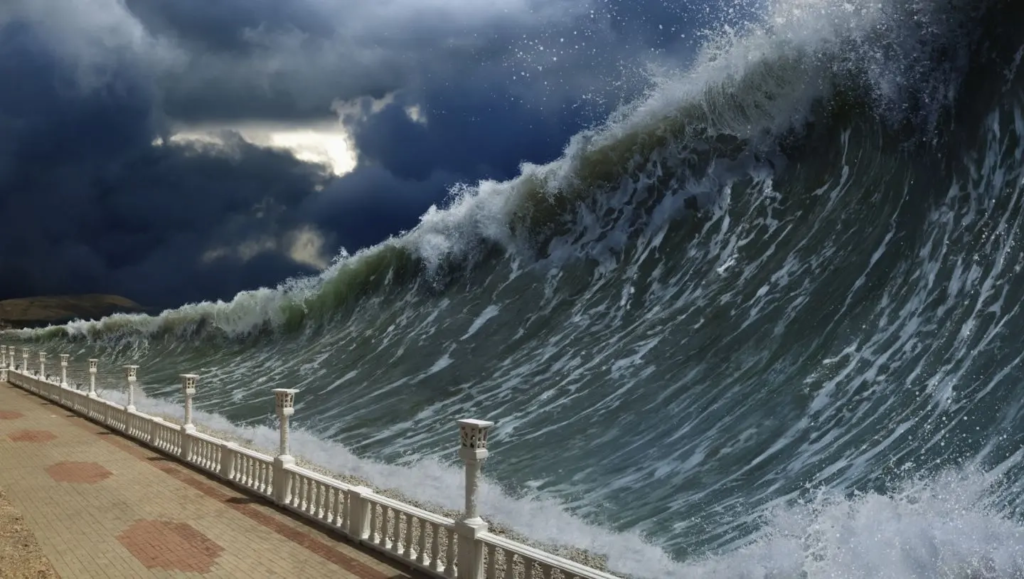
This creates the dangerous walls of water often shown during tsunami events.
How Are Tsunamis Formed?
Scientists explain tsunami formation using plate tectonics.
The most common causes include:
Subduction Zone Earthquakes
These occur where one tectonic plate slides beneath another.
Examples include:
- Japan
- Alaska
- Chile
- Indonesia
- Pacific Northwest
Most of the world’s largest tsunamis begin in these regions.
Volcanic Eruptions
Underwater volcanoes can rapidly displace water.
Historic examples include eruptions in:
- Tonga
- Indonesia
Landslides
Large underwater landslides can generate local tsunamis.
Mountain slopes collapsing into the ocean may also create destructive waves.
Meteor Impacts
Although extremely rare, a large asteroid striking the ocean could create enormous tsunami waves.
What Causes Tsunamis?
People often search:
- What causes a tsunami?
- What causes tsunamis?
- How does a tsunami form?
The answer depends on the event.
The most common causes are:
- Strong underwater earthquakes
- Volcanic eruptions
- Coastal landslides
- Underwater landslides
- Glacier collapses
- Meteor impacts
Earthquakes account for the vast majority of destructive tsunamis worldwide.
Where Do Tsunamis Happen?
Many readers ask:
- Where does the tsunami occur?
- Tsunami where do they happen?
Tsunamis occur mainly around the Pacific Ocean because it contains many active tectonic plate boundaries.
This area is called the Pacific Ring of Fire.
High-risk regions include:
- Japan
- Hawaii
- Alaska
- Indonesia
- Chile
- Philippines
- Papua New Guinea
- New Zealand
- U.S. West Coast
Other oceans can also experience tsunamis, although less frequently.
Why Is Hawaii Frequently Mentioned in Tsunami News?
Searches like:
- Hawaii tsunami
- Hawaii tsunami warning
- Tsunami Hawaii now
- Hawaii tsunami update
- Hawaii tsunami today
- Hawaii tsunami watch
are extremely common.
Hawaii sits in the middle of the Pacific Ocean.
Because tsunamis can travel across the Pacific, waves generated thousands of miles away may eventually reach the Hawaiian Islands.
This location makes Hawaii one of the world’s most carefully monitored regions for tsunami activity.
Why Is Japan Closely Connected with Tsunamis?
Japan experiences thousands of earthquakes every year.
Many occur beneath the Pacific Ocean.
Popular searches include:
- Japan tsunami
- Japan tsunami today
- Tsunami in Japan
- Japan earthquake tsunami warning
- Japan tsunami warning today
Japan lies along several active tectonic plate boundaries.
When large undersea earthquakes happen nearby, tsunami warnings may be issued within minutes.
Japan has developed one of the world’s most advanced tsunami warning systems because of its long history of earthquakes and tsunamis.
The Pacific Ocean and Tsunami Risk
The Pacific Ocean experiences the majority of global tsunami events.
Reasons include:
- Numerous subduction zones
- Frequent earthquakes
- Active volcanoes
- Constant tectonic plate movement
Countries surrounding the Pacific cooperate by sharing earthquake information and tsunami forecasts.
This international cooperation helps save lives.
What Is a Tsunami Warning?
A tsunami warning means dangerous tsunami waves are expected or already occurring.
Warnings are issued after scientists analyze:
- Earthquake magnitude
- Earthquake depth
- Earthquake location
- Ocean sensor data
- Tide gauge observations
If officials believe flooding is likely, they recommend immediate evacuation.
Tsunami Watch vs. Tsunami Advisory vs. Tsunami Warning
Many people confuse these terms.
Tsunami Watch
A watch means conditions exist that could produce a tsunami.
People should:
- Stay informed
- Monitor official updates
- Prepare to evacuate if needed
Tsunami Advisory
An advisory indicates strong currents or dangerous waves may affect coastlines.
Flooding may be limited, but entering the water can be extremely dangerous.
Tsunami Warning
A warning is the highest alert level.
People in evacuation zones should move to higher ground immediately.
How Does Tsunami Monitoring Work?
Modern tsunami monitoring combines several technologies.
Scientists monitor:
- Earthquakes
- Deep-ocean pressure sensors
- Ocean buoys
- Coastal tide gauges
- Satellite observations
- Computer forecasting models
These systems work together to estimate:
- Wave arrival time
- Wave height
- Flooding risk
- Coastal impact
The Role of the National Tsunami Warning Center
The National Tsunami Warning Center serves many parts of the United States by monitoring earthquake activity and evaluating potential tsunami threats. Working alongside the Pacific tsunami warning system and other scientific agencies, it analyzes seismic data, ocean measurements, and computer models to determine whether watches, advisories, or warnings should be issued.
Its responsibilities include:
- Detecting significant earthquakes
- Estimating tsunami potential
- Sharing alerts with emergency managers
- Providing updated forecasts as new information becomes available
This rapid communication helps communities make informed decisions during coastal emergencies.
How Fast Can Tsunami Waves Travel?
One surprising fact is the incredible speed of tsunami waves.
In deep ocean water, they may travel at speeds between 500 and 800 kilometers per hour (310–500 miles per hour). At these speeds, a tsunami generated near Japan can cross the Pacific Ocean and reach Hawaii or other coastlines within several hours.
Although the wave is moving extremely fast, it may be only a small height in deep water, making it difficult for ships to notice. The real danger appears when the wave reaches shallow coastal areas, where it slows down and grows much taller.
Common Myths About Tsunamis
Many misconceptions spread online, especially after major earthquakes or viral posts linked to terms like tsunaihaiya. Understanding the facts can help people respond more safely.
Some common myths include:
- A tsunami is always one giant wave. In reality, multiple waves often arrive over several hours.
- Every earthquake causes a tsunami. Only certain earthquakes, especially strong underwater ones that displace the seafloor, generate tsunamis.
- If the first wave is small, the danger is over. Later waves can be larger and more destructive.
- You can safely watch a tsunami from the beach. Tsunami waves and powerful currents can arrive suddenly and remain dangerous long after the first wave.
Understanding these facts is an important part of disaster preparedness and digital literacy.
Recent Interest in Tsunaihaiya and Online Search Trends
The growing interest in tsunaihaiya reflects how people search for information during natural disasters. When major earthquakes or tsunami warnings appear in the news, search engines often record millions of related searches within a short period.
Many users searching for tsunaihaiya may actually be looking for:
- Tsunami warning today
- Hawaii tsunami update
- Japan tsunami warning
- Tsunami tracker
- Pacific tsunami forecast
- Tsunami news
- Earthquake tsunami warning
- Tsunami monitoring
This behavior shows that people want quick, reliable information during emergencies. However, unusual keywords can sometimes lead users to unofficial websites or misleading content. It is always best to verify information through trusted scientific and emergency management agencies.
Did the Tsunami Hit Hawaii? Understanding This Common Question
Searches such as:
- Did the tsunami hit Hawaii?
- Did a tsunami hit Hawaii?
- Was there a tsunami in Hawaii?
- Has the tsunami hit Hawaii yet?
- When will tsunami hit Hawaii?
- When is the tsunami supposed to hit Hawaii?
often become popular after earthquakes in the Pacific Ocean.
The answer depends entirely on the specific event.
Not every earthquake produces a tsunami, and not every tsunami reaches Hawaii with dangerous flooding. Sometimes only small sea level changes or strong ocean currents occur. In other cases, warnings may be canceled after scientists determine there is little risk.
This is why emergency agencies continuously update forecasts as new ocean data becomes available.
Understanding Hawaii Tsunami Warnings
Because Hawaii is surrounded by the Pacific Ocean, residents receive alerts whenever significant earthquakes occur in tsunami-prone regions.
Common alert terms include:
- Hawaii tsunami warning
- Hawaii tsunami watch
- Hawaii tsunami advisory
- Hawaii tsunami update
- Hawaii tsunami forecast
- Tsunami alert for Hawaii
- Hawaii tsunami live
- Hawaii tsunami warning today
Each alert level has a different meaning.
A watch means officials are evaluating the threat.
An advisory warns of dangerous currents and coastal hazards.
A warning means people should immediately move to higher ground if instructed by local authorities.
Also Read:Donna Sicuranza: Complete Biography, Family, Legacy, and Life Story
Maui, Oahu, Hilo, and Other Hawaiian Islands
Different islands may receive different recommendations depending on the expected wave direction.
Popular searches include:
- Maui tsunami
- Oahu tsunami watch
- Hilo tsunami
- Hawaiian Islands tsunami
- Tsunami in Hawaii today
Hilo has experienced damaging tsunamis in the past because of its geographic location, making tsunami preparedness especially important for local communities.
Each island has evacuation routes, emergency shelters, and warning sirens designed to help protect residents and visitors.
Japan and Its Long History with Tsunamis
Japan is one of the most earthquake-active countries on Earth.
Common searches include:
- Japan tsunami
- Japan tsunami today
- Japan tsunami warning
- Japan tsunami warning today
- Japan earthquake today tsunami warning
- Japan earthquake tsunami warning
- Tsunami in Japan today
- Tsunami Japan today
- Japanese tsunami
- Tsunami in Japonia
- Tsunami Japonia
Japan’s location along multiple tectonic plate boundaries means earthquakes occur frequently. Because of this, the country has invested heavily in:
- Earthquake monitoring
- Tsunami forecasting
- Coastal flood defenses
- Public education
- Emergency evacuation systems
Japanese communities regularly participate in disaster drills to improve preparedness and reduce risk.
Alaska and Pacific Tsunami Risk
Alaska is another region that experiences frequent earthquakes.
Popular searches include:
- Tsunami warning Alaska
- Alaska tsunami warning
The Aleutian Islands and southern Alaska lie near active plate boundaries capable of generating large earthquakes and tsunamis. Because of their location, earthquakes in Alaska can sometimes affect coastlines throughout the Pacific Ocean.
Can California Experience Tsunamis?
Searches like “LA tsunami” often appear after Pacific earthquakes.
Although California experiences fewer destructive tsunamis than Japan or Hawaii, the state is not immune.
Potential tsunami sources include:
- Alaska
- Japan
- Chile
- Local offshore earthquakes
- Underwater landslides
Coastal communities have evacuation plans to prepare for these rare but possible events.
How Big Are Tsunami Waves?
Many people imagine towering walls of water.
In reality, tsunami size varies greatly.
Factors include:
- Earthquake strength
- Ocean depth
- Coastline shape
- Distance from the earthquake
- Local underwater geography
Some tsunamis measure only a few feet high, while others have reached heights exceeding 100 feet in localized areas.
The most dangerous aspect is often the enormous volume of moving water rather than wave height alone.
What Does a Tsunami Look Like?
People frequently ask:
“What does a tsunami look like?”
The answer surprises many people.
A tsunami may appear as:
- A rapidly rising tide
- A fast-moving flood
- A series of powerful waves
- Water suddenly pulling away from the shoreline
- Strong currents carrying debris
It does not always resemble the giant surfing waves often shown in movies.
Tsunami Damage
Tsunami damage results from several powerful forces.
These include:
Flooding
Large volumes of seawater move far inland.
Strong Currents
Fast-moving water can destroy roads, bridges, boats, and buildings.
Floating Debris
Cars, trees, and building materials become dangerous projectiles.
Coastal Erosion
Powerful waves reshape beaches and coastlines.
Infrastructure Damage
Utilities, transportation, communication systems, and ports may suffer extensive damage.
Recovery often takes months or even years after a major event.
How Scientists Predict Tsunamis
Although earthquakes cannot yet be predicted, tsunami forecasting has improved significantly.
Scientists use:
- Seismic monitoring stations
- GPS measurements
- Deep-ocean pressure sensors
- Tsunami buoys
- Tide gauges
- Computer simulations
- Satellite observations
Computer models estimate:
- Wave travel times
- Coastal flooding
- Arrival times
- Expected wave heights
Forecasts are updated continuously as new data becomes available.
Tsunami Tracker and Live Updates
Many people search for:
- Tsunami tracker
- Tsunami warning today live
- Tsunami updates
- Tsunami news
- Tsunami today
- Hawaii tsunami live
Modern tracking systems display:
- Earthquake locations
- Estimated wave arrival times
- Alert levels
- Ocean sensor observations
- Official warnings
It is important to rely on trusted government agencies rather than unverified social media posts during emergencies.
What Should You Do During a Tsunami Warning?
Preparation saves lives.
If a tsunami warning is issued:
- Move immediately to higher ground.
- Follow local evacuation routes.
- Stay away from beaches, rivers, and harbors.
- Listen to official emergency announcements.
- Do not return until authorities declare the area safe.
- Help children, older adults, and people with disabilities if possible.
- Keep an emergency supply kit ready.
Never wait to see the wave before evacuating.
How to Prepare Before a Tsunami
Preparation should begin long before any emergency.
Helpful steps include:
- Learn local evacuation routes.
- Know whether your home is in a tsunami hazard zone.
- Prepare emergency food and water.
- Keep important documents protected.
- Charge mobile devices during alerts.
- Create a family communication plan.
- Practice evacuation drills.
Preparation reduces panic and improves safety.
Also Read: Zooskooñ: The Future of Sustainable Zoos, Animal Welfare, and Wildlife Conservation
Interesting and Amazing Facts About Tsunamis
Here are some fascinating tsunami facts:
- The word “tsunami” comes from Japanese and means “harbor wave.”
- Tsunami waves can travel across entire oceans.
- Multiple waves usually arrive over several hours.
- The first wave is not always the largest.
- Deep ocean tsunami waves may be difficult for ships to notice.
- Some tsunamis travel nearly as fast as commercial airplanes.
- Hawaii operates one of the world’s most advanced tsunami warning systems.
- Japan conducts regular nationwide tsunami evacuation drills.
- Many coastal communities now use smartphone alerts alongside traditional warning sirens.
Tsunami Fact File
Here is a quick reference for readers.
| Topic | Information |
| Main Cause | Underwater earthquakes |
| Other Causes | Volcanoes, landslides, meteor impacts |
| Fastest Speed | Up to about 800 km/h (500 mph) in deep water |
| Most Active Region | Pacific Ring of Fire |
| Main Warning Types | Watch, Advisory, Warning |
| Dangerous Feature | Powerful flooding and currents |
| Monitoring Tools | Seismic stations, buoys, tide gauges, satellites |
| High-Risk Areas | Japan, Hawaii, Alaska, Chile, Indonesia |
Digital Literacy: Avoiding False Tsunami Information
False information often spreads quickly after major disasters.
To stay informed:
- Verify information through official emergency agencies.
- Be cautious of edited videos or old photos shared as current events.
- Check the publication date before sharing tsunami news.
- Avoid relying on rumors or anonymous social media accounts.
- Compare multiple trusted sources before believing dramatic claims.
Digital literacy helps reduce confusion during emergencies.
Frequently Asked Questions (FAQ)
What does tsunaihaiya mean?
Tsunaihaiya is not an officially recognized scientific term. It appears to be an internet search phrase connected with tsunami-related topics, especially Hawaii, Japan, and tsunami warnings.
What causes a tsunami?
Most tsunamis are caused by powerful underwater earthquakes that suddenly displace large amounts of seawater.
Can every earthquake create a tsunami?
No. Only certain earthquakes, usually those occurring beneath the ocean and involving significant seafloor movement, generate tsunamis.
Why does Hawaii receive so many tsunami alerts?
Hawaii is located in the Pacific Ocean, where many large earthquakes occur. Tsunami waves can travel long distances across the Pacific, making monitoring especially important.
Why is Japan closely associated with tsunamis?
Japan lies on several active tectonic plate boundaries and experiences frequent earthquakes, making tsunami preparedness a national priority.
How are tsunamis monitored?
Scientists use earthquake detection systems, deep-ocean pressure sensors, tide gauges, GPS, satellites, and computer models to monitor and forecast tsunami activity.
Can tsunamis be prevented?
No. Tsunamis are natural events that cannot be prevented. However, early warning systems, education, and evacuation planning greatly reduce the risk to human life.
What should I do if I feel a strong earthquake near the coast?
If you are in a coastal area and experience a strong or long-lasting earthquake, move to higher ground immediately without waiting for an official warning.
Are tsunami waves always giant walls of water?
No. Many tsunamis look more like rapidly rising floodwaters or powerful currents than the dramatic waves often shown in movies.
Why are official tsunami updates important?
Official updates are based on real-time scientific data and help people make safe decisions during changing emergency conditions.
Conclusion
The growing popularity of the keyword tsunaihaiya demonstrates how people turn to search engines for answers during natural disasters. Although the term itself is not officially recognized, it is strongly connected with public interest in tsunamis, Hawaii tsunami warnings, Japan earthquakes, Pacific tsunami monitoring, and coastal safety.
Understanding how tsunamis form, what causes them, and how warning systems work is essential for anyone living in or visiting coastal regions. Advances in earthquake detection, ocean monitoring, and forecasting have significantly improved the world’s ability to provide timely alerts, helping communities respond more effectively to potential threats.
The most important takeaway is that preparedness saves lives. By following official guidance, recognizing natural warning signs, and relying on trusted sources for information, individuals and families can make informed decisions during tsunami emergencies. Whether you searched for tsunaihaiya, tsunami warning today, Hawaii tsunami update, or Japan tsunami warning, building knowledge about these powerful natural events is the first step toward staying safe.