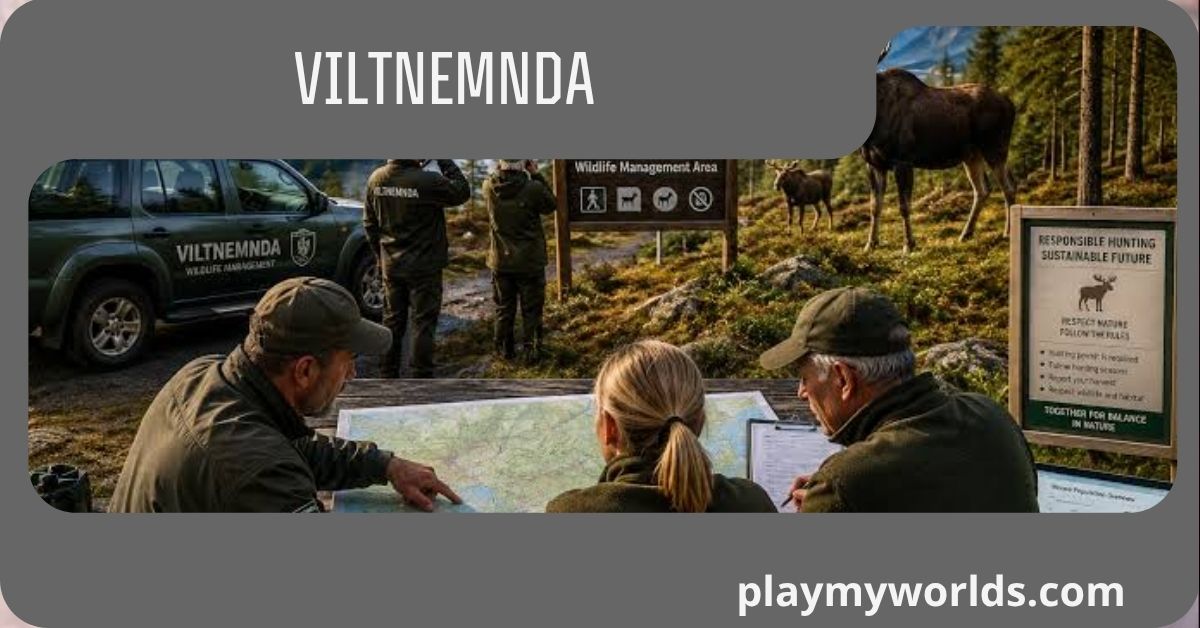
Viltnemnda: Complete Guide to Norway’s Local Wildlife Committee
Wildlife management is an essential part of protecting nature while ensuring that people and animals can safely share the same environment. In Norway, one of the most important local authorities responsible for this work is the viltnemnda. Although many people outside Scandinavia may not be familiar with the term, the viltnemnda plays a significant role in managing wildlife populations, overseeing hunting regulations, responding to wildlife emergencies, and reducing conflicts between humans and wild animals.
As wildlife populations grow and human development expands into natural habitats, effective wildlife management has become more important than ever. Local decision-making helps create balanced solutions that protect biodiversity while supporting farmers, hunters, landowners, and the general public.
This complete guide explains everything you need to know about viltnemnda, including its responsibilities, structure, decision-making process, legal authority, cooperation with other agencies, emergency response duties, hunting management, conservation efforts, and future challenges. Whether you are researching Norwegian wildlife management, studying environmental policy, or simply curious about how local wildlife committees operate, this article provides a detailed yet easy-to-understand explanation.
What Is Viltnemnda?
Viltnemnda is the local wildlife committee established by Norwegian municipalities to manage wildlife-related matters within their jurisdiction. The committee acts as an important connection between national wildlife laws and local environmental needs.
Rather than making decisions for the entire country, each municipality’s viltnemnda focuses on local wildlife populations, habitat conditions, hunting management, conservation priorities, and wildlife conflicts.
The committee helps ensure that wildlife resources are managed responsibly while balancing environmental protection with public safety, agriculture, forestry, recreation, and sustainable hunting.
In simple terms, the viltnemnda is responsible for making local wildlife decisions based on national regulations, scientific information, and community needs.
Why Viltnemnda Is Important
Modern wildlife management is far more complex than simply protecting animals. Communities must balance many competing interests.
These include:
- Protecting endangered species
- Maintaining healthy wildlife populations
- Preventing overpopulation
- Supporting sustainable hunting
- Protecting farmland
- Reducing vehicle collisions with wildlife
- Responding to injured animals
- Conserving habitats
- Educating local communities
The viltnemnda serves as a local decision-making body that considers all these factors before making recommendations or approvals.
Also Read:Innøve: The Complete Guide to the Future of Digital Transformation
Without organized local wildlife committees, municipalities would struggle to manage growing wildlife populations effectively.
History of Viltnemnda
Norway has a long history of managing wildlife through both national legislation and local governance.
Historically, hunting was primarily viewed as a source of food. Over time, wildlife management evolved into a scientific discipline focused on sustainability.
The development of municipal wildlife committees reflected several important changes:
- Better understanding of ecosystems
- Growth in wildlife conservation
- Increased environmental awareness
- Expansion of wildlife research
- Greater public participation
- Improved hunting regulations
- Stronger protection for biodiversity
Today, the viltnemnda represents an important part of Norway’s decentralized approach to environmental management.
Legal Foundation of Viltnemnda
The authority of the viltnemnda comes from Norwegian wildlife legislation and municipal governance.
Although exact responsibilities may differ slightly between municipalities, committees generally operate within national legal frameworks that regulate:
- Wildlife conservation
- Hunting rights
- Protected species
- Wildlife population control
- Habitat protection
- Animal welfare
- Emergency wildlife response
This legal structure helps ensure consistency across Norway while allowing flexibility for local conditions.
How Viltnemnda Is Organized
Each municipality appoints members to serve on the wildlife committee.
Members often have experience in areas such as:
- Wildlife biology
- Forestry
- Agriculture
- Environmental management
- Public administration
- Local government
- Hunting organizations
- Conservation groups
Having members from different backgrounds helps ensure balanced decisions that consider both environmental and community interests.
Main Responsibilities of Viltnemnda
The responsibilities of the viltnemnda cover many different aspects of wildlife management.
Major duties include:
Wildlife Population Management
Monitoring wildlife populations is one of the committee’s most important responsibilities.
Population management includes:
- Counting wildlife
- Tracking population growth
- Identifying population decline
- Monitoring migration
- Recording births
- Assessing habitat quality
Scientific monitoring helps guide responsible management decisions.
Hunting Management
Hunting remains an important wildlife management tool in Norway.
The viltnemnda helps manage hunting by:
- Reviewing hunting quotas
- Supporting sustainable harvest levels
- Evaluating local wildlife numbers
- Recommending management strategies
- Reviewing hunting applications
- Monitoring hunting impacts
The goal is to maintain healthy populations without causing unnecessary environmental pressure.
Wildlife Conservation
Conservation extends beyond protecting rare species.
The committee also works to:
- Maintain healthy ecosystems
- Preserve habitats
- Support biodiversity
- Protect breeding areas
- Encourage ecological balance
- Reduce habitat fragmentation
Healthy ecosystems benefit both wildlife and people.
Human-Wildlife Conflict Resolution
As communities expand, encounters between people and wildlife become more common.
The viltnemnda helps resolve conflicts involving:
- Moose
- Deer
- Foxes
- Birds
- Beavers
- Predators
- Wild animals entering residential areas
Each situation requires careful evaluation to protect both public safety and wildlife.
Emergency Wildlife Response
Wildlife emergencies require quick action.
Common emergency situations include:
- Injured animals
- Animals trapped in fences
- Wildlife after vehicle accidents
- Dangerous animal encounters
- Orphaned young animals
- Disease outbreaks
The committee often works with emergency services and wildlife professionals during these incidents.
Wildlife Species Managed by Viltnemnda
Different municipalities manage different wildlife species depending on geography.
Common species include:
Moose
Moose are among Norway’s largest land mammals.
Management focuses on:
- Population balance
- Hunting quotas
- Forest damage prevention
- Road safety
Red Deer
Red deer populations have grown significantly in some areas.
Management includes:
- Population monitoring
- Habitat assessment
- Hunting regulation
Roe Deer
These smaller deer require careful monitoring due to changing environmental conditions.
Wild Reindeer
Some municipalities help protect wild reindeer habitats and migration routes.
Beavers
Beavers create valuable wetland habitats but may also affect farmland and infrastructure.
Birds
Many bird species receive protection through habitat conservation and breeding area management.
Predators
Depending on the region, predator management may include:
- Lynx
- Wolverines
- Wolves
- Bears
These species require careful coordination with national authorities.
How Viltnemnda Supports Sustainable Hunting
Sustainable hunting helps maintain balanced wildlife populations.
The viltnemnda supports responsible hunting by encouraging:
- Ethical hunting practices
- Accurate wildlife reporting
- Scientific population assessments
- Respect for hunting seasons
- Proper licensing
- Habitat conservation
Sustainability ensures future generations can continue enjoying healthy wildlife populations.
Wildlife Monitoring Methods
Reliable information leads to better decisions.
Monitoring techniques include:
- Field surveys
- Camera monitoring
- Population counts
- Hunter reports
- GPS tracking
- Habitat mapping
- Biological research
- Citizen observations
Combining multiple data sources improves management accuracy.
Cooperation With Other Organizations
The viltnemnda rarely works alone.
Important partners include:
Municipal Government
Municipal leaders provide administrative support and coordinate local policies.
Environmental Agencies
National and regional agencies help develop regulations and conservation strategies.
Hunters
Hunters contribute valuable field observations and population data.
Landowners
Private landowners help protect habitats and report wildlife activity.
Police
Police may assist during dangerous wildlife situations or enforcement actions.
Veterinarians
Veterinary professionals support injured wildlife and disease investigations.
Researchers
Universities and research institutions provide scientific knowledge that improves wildlife management.
Also Read:Eo pis: The Enterprise Operations Process Information System
Decision-Making Process
Good wildlife management depends on informed decisions.
The viltnemnda typically follows several steps:
Information Collection
Data comes from surveys, scientific reports, hunters, residents, and environmental agencies.
Evaluation
Committee members review ecological, legal, and community considerations.
Public Input
Some decisions include consultation with local stakeholders.
Final Decision
Recommendations or approvals are made according to applicable laws and municipal authority.
Monitoring Results
After implementation, outcomes are monitored to determine whether adjustments are needed.
Human-Wildlife Conflict Management
Conflicts occur when wildlife and human activities overlap.
Examples include:
- Crop damage
- Garden destruction
- Livestock attacks
- Traffic accidents
- Property damage
- Public safety concerns
Rather than immediately removing animals, the viltnemnda usually considers several possible solutions.
These may include:
- Better fencing
- Habitat improvements
- Public education
- Population management
- Relocation where appropriate
- Controlled hunting when legally permitted
This balanced approach reduces long-term conflicts.
Wildlife Emergencies
Emergency situations require cooperation between several organizations.
Typical emergencies include:
Road Collisions
Moose and deer collisions can be dangerous.
The committee helps coordinate:
- Animal assessment
- Recovery efforts
- Public safety
- Reporting
Injured Wildlife
Animals injured by accidents or natural causes may require professional evaluation.
Disease Monitoring
Monitoring diseases helps protect wildlife populations and domestic animals.
Extreme Weather
Heavy snow, flooding, or storms may affect wildlife survival and habitat conditions.
Public Education
Education is a major part of effective wildlife management.
The viltnemnda helps communities understand:
- Wildlife behavior
- Hunting regulations
- Animal safety
- Habitat conservation
- Responsible outdoor recreation
- Reporting wildlife observations
An informed public supports better conservation outcomes.
Technology Used by Viltnemnda
Modern wildlife management increasingly depends on technology.
Useful tools include:
- Geographic Information Systems (GIS)
- GPS wildlife tracking
- Drone surveys
- Remote cameras
- Digital reporting systems
- Population databases
- Mobile applications
Technology improves efficiency while providing better scientific data.
Environmental Benefits of Viltnemnda
Effective wildlife management creates long-term environmental benefits.
These include:
- Healthy ecosystems
- Balanced predator-prey relationships
- Improved biodiversity
- Protected habitats
- Sustainable forests
- Better water quality
- Climate resilience
Managing wildlife responsibly supports the entire natural environment.
Challenges Facing Viltnemnda
Wildlife management continues to evolve.
Modern challenges include:
Climate Change
Changing temperatures affect:
- Animal migration
- Food availability
- Reproduction
- Habitat quality
Urban Expansion
Growing communities reduce natural habitats and increase wildlife encounters.
Increasing Wildlife Populations
Successful conservation sometimes creates new management challenges.
Large populations may increase:
- Crop damage
- Forest impacts
- Vehicle accidents
Public Expectations
Different community groups often have different opinions regarding wildlife management.
Finding balanced solutions requires careful communication.
Limited Resources
Some municipalities operate with limited staff and financial resources while managing growing responsibilities.
Future of Viltnemnda
Wildlife management will likely become even more data-driven in the coming years.
Future improvements may include:
- Better population modeling
- Artificial intelligence for wildlife monitoring
- Expanded habitat restoration
- Improved digital reporting
- Greater public participation
- Enhanced scientific collaboration
These innovations will help committees make even more informed decisions.
Best Practices for Effective Wildlife Management
Successful wildlife committees often follow several guiding principles.
These include:
- Evidence-based decisions
- Transparency
- Community involvement
- Scientific monitoring
- Long-term planning
- Sustainable resource management
- Respect for biodiversity
- Continuous learning
These principles help create balanced wildlife policies.
What Can Residents Do?
Local communities play an important role in wildlife conservation.
Residents can help by:
- Reporting injured wildlife
- Following hunting regulations
- Respecting protected habitats
- Avoiding feeding wild animals
- Driving carefully in wildlife crossing areas
- Supporting conservation initiatives
- Participating in local environmental programs
Community involvement strengthens wildlife management.
Common Misunderstandings About Viltnemnda
Several misconceptions exist about the role of the viltnemnda.
One common misunderstanding is that the committee exists only to regulate hunting. In reality, hunting is just one part of a much broader responsibility that includes conservation, emergency response, habitat management, education, and conflict resolution.
Another misconception is that the committee works independently without scientific guidance. In practice, decisions are usually informed by wildlife data, legal requirements, environmental research, and cooperation with multiple organizations.
Some people also believe that wildlife committees only respond after problems occur. In fact, much of their work focuses on prevention through monitoring, planning, habitat protection, and public awareness.
Why the Viltnemnda Model Is Effective
The success of Norway’s local wildlife management system comes from combining national environmental policies with local knowledge.
Local committees understand regional wildlife populations, seasonal changes, community concerns, and habitat conditions better than a centralized organization could. At the same time, national laws provide consistency and ensure that conservation goals are met across the country.
This balance allows municipalities to respond quickly to local challenges while maintaining high standards for wildlife protection and sustainable resource management.
For countries exploring decentralized environmental governance, the viltnemnda model demonstrates how local participation, scientific evidence, and clear legal frameworks can work together to support healthy ecosystems and responsible wildlife management.
Conclusion
The viltnemnda is much more than a local hunting committee. It serves as a comprehensive wildlife management body responsible for protecting ecosystems, maintaining sustainable wildlife populations, managing hunting activities, responding to emergencies, reducing human-wildlife conflicts, and supporting long-term conservation.
Its work reflects a modern approach to environmental stewardship that balances ecological sustainability with the practical needs of communities. By combining scientific knowledge, local experience, legal authority, and public cooperation, the viltnemnda helps ensure that Norway’s wildlife remains healthy and well-managed for future generations.
As environmental challenges continue to evolve, the importance of local wildlife committees will only increase. Through responsible planning, community engagement, and evidence-based decision-making, the viltnemnda remains an essential part of sustainable wildlife governance.
Frequently Asked Questions About Viltnemnda
What does viltnemnda mean?
Viltnemnda refers to a municipal wildlife committee in Norway that manages local wildlife issues, hunting administration, conservation efforts, wildlife emergencies, and human-wildlife conflict resolution.
Is viltnemnda responsible for all wildlife decisions?
No. The committee handles many local wildlife matters, but some decisions remain under the authority of regional or national environmental agencies, especially those involving protected species or nationwide policies.
Who serves on a viltnemnda?
Members are typically appointed by the municipality and may include individuals with experience in environmental management, agriculture, forestry, public administration, hunting, or conservation.
Does viltnemnda issue hunting licenses?
Its role varies by municipality. It may assist with local hunting administration, quota recommendations, permit-related responsibilities, and wildlife management planning within the framework of Norwegian law.
How does viltnemnda respond to injured wildlife?
The committee coordinates with veterinarians, wildlife specialists, municipal authorities, and emergency responders to assess the situation and determine the most appropriate action.
Can residents contact the viltnemnda about nuisance wildlife?
Yes. Residents can report wildlife-related concerns such as repeated property damage, injured animals, or potentially dangerous wildlife encounters through their municipality’s established reporting channels.
How does viltnemnda use scientific data?
The committee relies on wildlife surveys, population monitoring, ecological research, field observations, and reporting from hunters and residents to support evidence-based decisions.
Does climate change affect the work of viltnemnda?
Yes. Climate change influences migration patterns, breeding seasons, habitat quality, food availability, and disease risks, making adaptive wildlife management increasingly important.