Gramhir Pro AI: The AI Image Generator, Features, Uses, Safety, and Alternatives
Artificial intelligence has changed the way people create digital images. In the past, making a professional-looking image often required graphic design skills, expensive software, or help from a designer. Today, text-to-image AI tools allow users to describe an idea in ordinary language and receive a visual result.
One name that has attracted attention in this space is gramhir pro ai.
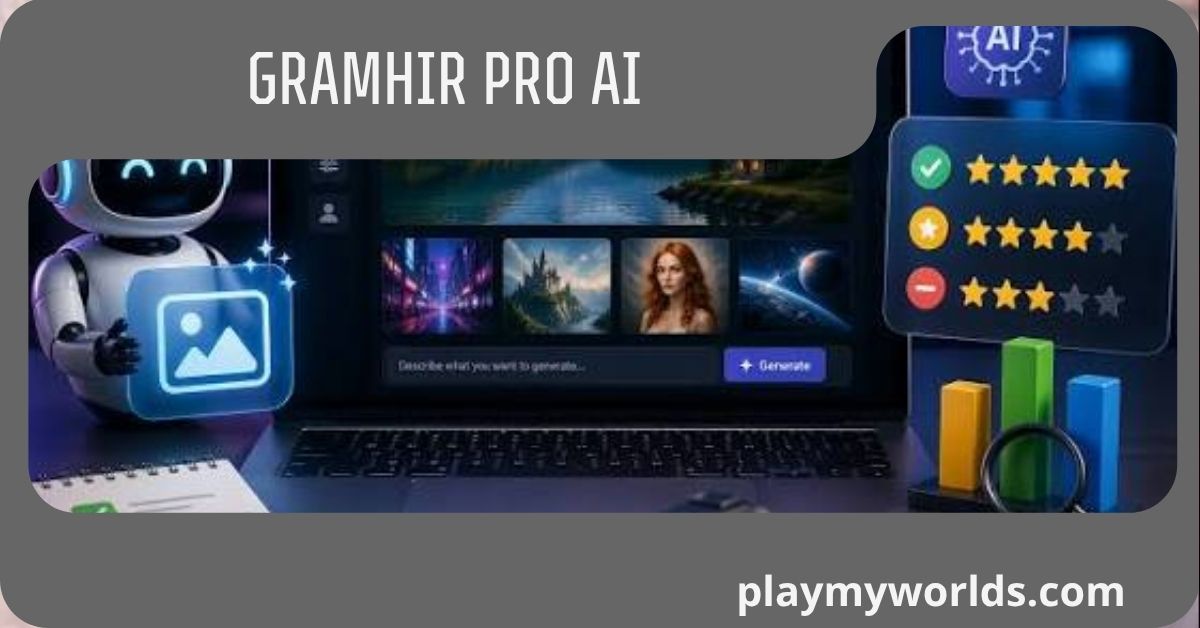
Gramhir Pro AI is commonly described across third-party websites as a tool that can turn written prompts into images. The basic idea is simple: a user enters a description of an image, and an artificial intelligence system interprets the words and creates a visual based on them.
However, there is an important issue that anyone researching gramhir pro ai should understand. Online information about the service is inconsistent. Some websites describe it as an active AI image generator with features such as text-to-image creation, style controls, and fast image generation. Other investigations report that a working public Gramhir Pro AI image-generation service cannot currently be independently verified.
That difference matters.
Rather than repeating every claim found online as fact, this guide looks at gramhir pro ai from a practical and evidence-focused perspective. It explains what the name is associated with, how the proposed image-generation process would work, what users should look for before trusting an AI service, how to write better prompts, what businesses could potentially use such technology for, and which alternatives may be more appropriate when a verified image-generation platform is required.
What Is Gramhir Pro AI?
Gramhir Pro AI is generally presented online as an artificial intelligence image-generation concept or service that converts text prompts into digital images.
For example, a user might enter a description such as:
“Create a modern coffee shop interior with large windows, warm morning sunlight, wooden furniture, indoor plants, and a clean American urban style.”
A text-to-image system would interpret those instructions and attempt to produce an image representing the requested scene.
This type of technology is known as generative AI because the system generates new content based on an input rather than simply displaying an existing picture.
Several third-party articles describe Gramhir Pro AI in this way. They associate it with prompt-based image creation and suggest that it could be useful for bloggers, marketers, social media creators, designers, and businesses.
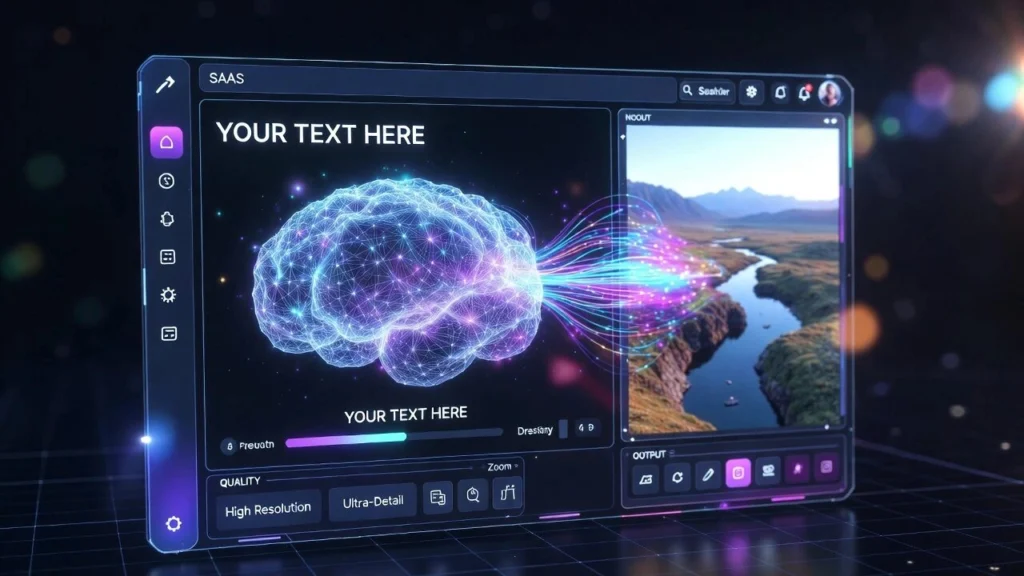
At the same time, research published during 2026 has raised questions about whether the advertised Gramhir Pro AI image generator is actually available as a functioning public product. Some investigations say that users may find promotional articles describing features that are not clearly available on the current website.
Therefore, the safest description is that gramhir pro ai is a name currently associated online with AI-powered image generation, but its exact current product status and capabilities should be verified before users depend on it for important work.
Why Is Gramhir Pro AI Getting Attention?
The interest in gramhir pro ai is part of a much larger trend.
People increasingly want to create images without learning complicated design software. A small business owner may need a social media graphic. A blogger may need an article illustration. A YouTube creator may need a thumbnail concept. A teacher may need a visual for a lesson.
Traditional design methods can take significant time.
Generative AI changes the workflow.
Instead of starting with a blank canvas, users can begin with an idea written in natural language. The AI handles much of the initial visual creation.
This makes the concept behind gramhir pro ai attractive to beginners.
The appeal can be summarized in a simple workflow:
Idea → Text Prompt → AI Generation → Review → Editing → Final Image
The most important part of this process is not simply pressing a generation button. The quality of the final image depends heavily on the prompt, the underlying AI model, the available controls, and the user’s ability to review the result.
The Important Difference Between Online Claims and Verified Features
When researching an AI tool, it is easy to confuse an article about a product with evidence that the product actually exists and works as described.
Also Read: Loralee Czuchna: The Private Life of Don Knotts’ Second Wife – Biography, Marriage, and Legacy
This is especially important with gramhir pro ai.
A number of websites describe features such as high-resolution image generation, multiple styles, prompt controls, fast rendering, and other capabilities.
But other sources have investigated these claims and found no clearly accessible public image-generation interface associated with the website. Some reports specifically state that the supposed image generator was not live or could not be independently confirmed.
This creates a useful lesson for consumers:
Do not judge an AI tool only by how many articles describe it.
A reliable evaluation should consider whether the service has:
- A clearly identifiable official product
- A working user interface
- Current documentation
- Clear ownership information
- Transparent pricing
- Privacy information
- Terms of service
- Clear image-use rights
- Actual examples that can be independently tested
- A dependable method for contacting support
These factors are more useful than marketing language alone.
How a Text-to-Image AI System Works
Although the exact technology behind gramhir pro ai cannot be confidently established from the available public evidence, it is useful to understand how modern AI image generators generally work.
A text-to-image system receives a written prompt.
The system analyzes the words and identifies important concepts such as:
- Objects
- People
- Locations
- Colors
- Lighting
- Composition
- Style
- Mood
- Relationships between objects
The AI then converts the information into a representation that can be used to produce an image.
Modern image-generation systems can use different model architectures. Some older systems relied heavily on Generative Adversarial Networks, commonly called GANs. Many newer image-generation systems use diffusion-based approaches or related architectures.
Some articles about gramhir pro ai specifically claim that it uses GAN technology.
However, users should not automatically accept a specific technical claim unless it comes from reliable technical documentation or the developer itself.
The important point for an everyday user is simpler:
The AI tries to translate language into visual information.
What Is a Text Prompt?
A text prompt is the instruction given to an AI image generator.
A weak prompt might say:
“Dog in a park.”
This gives the AI very little information.
A stronger prompt might say:
“A friendly golden retriever sitting beside a wooden park bench in a green city park during early morning, soft natural sunlight, realistic photography, shallow depth of field.”
The second prompt provides much more direction.
It tells the system:
- What the subject is
- Where the subject is
- What the environment looks like
- What time of day it is
- What kind of lighting is wanted
- What visual style is preferred
This principle applies to almost every text-to-image AI platform, including any system described as gramhir pro ai.
How to Write Better Prompts
Good prompting does not require complicated technical knowledge.
A simple formula is:
Subject + Setting + Style + Lighting + Mood + Composition
For example:
“Modern American family kitchen, bright open-plan interior, realistic photography, natural window light, warm and welcoming mood, wide-angle composition.”
This is more useful than simply writing:
“Kitchen.”
Start With the Main Subject
Tell the AI what you want to see.
Examples include:
- A person
- A product
- A house
- A vehicle
- An animal
- A landscape
- A food dish
- An abstract concept
Be clear about the main object.
Describe the Environment
The background can completely change an image.
Instead of:
“A businessman.”
Try:
“A businessman working at a modern office desk with large windows overlooking a downtown American city.”
Specify the Style
You can describe the desired visual direction.
Examples include:
- Realistic photograph
- Digital illustration
- Watercolor
- 3D render
- Minimalist graphic
- Editorial illustration
- Cinematic scene
- Cartoon
- Product photography
The available style controls will depend on the actual AI platform being used.
Explain the Lighting
Lighting is one of the easiest ways to influence an image.
Useful descriptions include:
- Soft morning light
- Studio lighting
- Golden-hour sunlight
- Dramatic shadows
- Natural window light
- Bright daylight
- Low-key lighting
Add Composition Details
Composition tells the AI how the scene should be arranged.
For example:
“Centered product with plenty of empty space around it.”
Or:
“Wide landscape composition with the mountains in the background.”
This can be particularly helpful for marketing materials.
Example Gramhir Pro AI Prompts
If a verified Gramhir Pro AI image-generation interface becomes available, users could potentially apply standard text-to-image prompting techniques.
Here are several example prompt structures.
Business Image Prompt
“Professional American business team meeting in a bright modern office, diverse group of employees discussing a project around a conference table, realistic corporate photography, natural daylight, clean professional environment.”
Social Media Prompt
“Bright modern lifestyle image for a social media post, young entrepreneur working on a laptop in a stylish home office, natural sunlight, clean background, realistic photography, vertical composition.”
Technology Prompt
“Futuristic artificial intelligence concept, glowing digital network connecting computers and people, modern blue-toned technology environment, cinematic lighting, high-detail digital artwork.”
Food Prompt
“Fresh American breakfast served on a wooden table, pancakes with berries and maple syrup, warm morning sunlight, realistic food photography, shallow depth of field.”
Travel Prompt
“Scenic American mountain lake surrounded by pine forests at sunrise, calm water reflections, soft golden light, realistic landscape photography, wide composition.”
These examples demonstrate the basic principle: give the image model enough useful information to understand the desired result.
Potential Uses of Gramhir Pro AI
If an AI image generator provides the expected functionality, its biggest advantage is convenience.
A user does not necessarily need to create every image from scratch.
Bloggers
Bloggers can use AI-generated visuals for article concepts, illustrations, featured-image ideas, and supporting graphics.
For example, a technology article could use an original concept showing a futuristic workspace.
However, the image should support the article rather than simply exist for decoration.
Social Media Creators
Social media platforms are highly visual.
Creators constantly need new ideas for:
- Posts
- Stories
- Campaign concepts
- Background images
- Promotional graphics
- Creative experiments
An AI image generator can help with brainstorming and rapid visual experimentation.
Small Businesses
Small businesses often have limited design budgets.
A restaurant might need a seasonal promotional concept. A local service company might need a social media graphic. An online store might need creative backgrounds for products.
AI can reduce the time needed to create initial concepts.
Marketing Teams
Marketing professionals can use generative AI during the early stages of campaign development.
For example, instead of spending hours creating several rough concepts manually, a team could generate multiple visual directions and then select the strongest idea for professional production.
Students and Educators
AI-generated images can help explain abstract concepts.
A teacher could create an illustrative scene for a lesson, while a student could use AI to brainstorm visual ideas for a project.
The final material should still follow school rules and copyright requirements.
Designers
Professional designers do not necessarily need AI to replace their work.
Instead, AI can serve as an idea-generation assistant.
A designer might use an image generator to explore:
- Composition ideas
- Color directions
- Mood boards
- Concept art
- Early visual experiments
Human editing can then turn the rough idea into a polished design.
Benefits of AI Image Generation
The popularity of tools associated with gramhir pro ai comes from several genuine benefits of generative image technology.
Also Read: Pigeimmo: The Smart Real Estate Platform for Property Search, Data Analysis, and Investment
Speed
AI can generate visual concepts much faster than many traditional design workflows.
This is useful when a creator needs several ideas quickly.
Accessibility
Beginners can create visual concepts without mastering advanced design software.
A written description becomes the starting point.
Experimentation
AI makes it easy to try unusual ideas.
A creator can test several concepts before deciding which direction works best.
Lower Initial Cost
Some AI tools provide free access or relatively low-cost plans.
However, users should always verify current pricing rather than relying on old articles.
Creative Brainstorming
AI can help people explore ideas they might not have considered.
That can make it valuable even when the final image is created manually.
Limitations You Should Understand
AI image generation is not magic.
There are important limitations.
AI Can Misunderstand Prompts
A system may interpret your words differently from what you intended.
A prompt asking for a simple family scene may produce unusual poses, incorrect object relationships, or visual details that do not make sense.
Human Anatomy Can Still Be Difficult
AI systems have improved greatly, but unusual hands, facial details, body positions, and interactions can still produce errors.
Text Inside Images Can Be Problematic
If you ask an AI image generator to create a poster containing a long sentence, the lettering may be incorrect.
For professional graphics, it is often better to generate the background with AI and add final text using a design application.
Consistency Can Be Difficult
Generating the same character or product repeatedly can be challenging.
A business campaign may require a consistent visual identity, and not every AI tool handles consistency equally well.
AI Does Not Understand Business Goals
AI can generate a beautiful image that does not help sell a product.
A successful marketing image needs more than visual quality.
It should support a clear business objective.
Is Gramhir Pro AI Free?
Pricing information about gramhir pro ai is inconsistent across third-party sources.
Some pages describe free access, while others claim that paid or premium plans may exist.
Because the current official product status is difficult to verify, users should not rely on a third-party article for current pricing.
Before entering payment information, check for:
- An official pricing page
- Clearly stated subscription terms
- Renewal information
- Refund rules
- Cancellation instructions
- Secure payment processing
- Contact information
A professional AI service should make these details easy to find.
Is Gramhir Pro AI Legit?
This is one of the most important questions surrounding the name.
The answer requires some nuance.
There are many online articles presenting gramhir pro ai as an AI image generator. But independent investigations have questioned whether the advertised generator is actually available as a working public service.
Because of this conflicting evidence, users should be careful about treating promotional claims as confirmed facts.
That does not automatically prove that every website discussing the service is malicious.
It simply means that the product’s current capabilities and availability should be independently verified before users provide sensitive information, upload private files, or purchase a subscription.
This is an important lesson for the entire AI industry.
A product can become popular in search results before users have enough reliable evidence to evaluate it.
How to Check an AI Tool Before Using It
Before using an unfamiliar AI image generator, follow a simple checklist.
Check the Official Website
Make sure you are visiting the correct domain.
Be cautious with websites using similar names.
Look for Product Documentation
A legitimate technology product should normally provide some information about how the service works.
Check Privacy Information
Find out what happens to uploaded images and prompts.
Important questions include:
- Are prompts stored?
- Are uploaded images stored?
- Are images used to improve models?
- How long is information retained?
- Can users delete their data?
Read Terms of Service
Terms may explain ownership and acceptable-use rules.
Do not assume that every AI-generated image automatically has unlimited commercial rights.
Verify Pricing
Do not rely on old blog posts for subscription information.
Pricing can change.
Test Before Paying
If a service offers a free trial, use it first.
See whether the product actually performs the task you need.
Privacy Considerations for AI Image Generators
Privacy deserves special attention.
Never assume that an AI service treats every uploaded image as private.
If you upload a family photo, company document, customer image, confidential product design, or unreleased marketing material, you need to understand the service’s data policies.
For business users, this becomes even more important.
Before uploading confidential material, check whether the platform explains:
- Data retention
- Model training
- Third-party processing
- Account security
- Data deletion
- User content ownership
If these policies are unclear, avoid uploading sensitive material.
Copyright and Ownership
Copyright questions surrounding AI-generated images can be complicated.
The rules can differ depending on the country, the amount of human creativity involved, the source material, and the way an image was generated.
For users in the United States, it is especially important to understand that simply generating an image with AI does not necessarily provide the same type of copyright protection as creating original work entirely through human creativity.
Businesses should therefore avoid making broad assumptions about ownership.
If an image is important to a commercial project, consider getting legal advice about the specific circumstances.
Can AI Images Be Used Commercially?
Commercial use depends on the terms of the particular AI service and applicable law.
Do not assume that an image is commercially safe simply because a website lets you download it.
Before using an AI image in:
- Advertising
- Product packaging
- Merchandise
- Book covers
- Paid campaigns
- Client work
- Company branding
check the service’s current license terms.
Also consider trademark issues, recognizable people, copyrighted characters, and other intellectual-property concerns.
Gramhir Pro AI for SEO and Content Marketing
AI images can support SEO indirectly.
Search engines do not simply rank a page because it contains an AI-generated picture.
A strong page still needs useful information, clear structure, good writing, technical quality, and a positive user experience.
AI-generated visuals can help by making an article more attractive and easier to understand.
For example, an article about home office design could use a relevant workspace image.
But the image should add value.
Creating dozens of unrelated AI pictures simply to make a page longer is not a good content strategy.
The same principle applies to AI-written text.
Quality matters more than volume.
How Businesses Can Use AI More Effectively
A useful approach is to treat AI as an assistant rather than a complete replacement for human judgment.
For example:
Step 1: Define the business goal.
Step 2: Decide what visual is actually needed.
Step 3: Write a clear prompt.
Step 4: Generate several concepts.
Step 5: Review each image critically.
Step 6: Fix errors manually.
Step 7: Add branding and text.
Step 8: Check licensing and usage rights.
Step 9: Publish only the version that meets the business goal.
This workflow is much stronger than simply generating an image and publishing it immediately.
Gramhir Pro AI Compared With Established AI Image Tools
If the goal is reliable image creation today, users should also evaluate established services with clear product documentation and active user interfaces.
Examples of widely known AI image ecosystems include Midjourney, Adobe Firefly, OpenAI image-generation tools, Stable Diffusion-based applications, Leonardo AI, and Ideogram.
The best option depends on the user’s needs.
A marketer may prioritize brand controls.
A designer may care about creative control.
A business may prioritize commercial terms.
A beginner may care most about ease of use.
A user who needs accurate text inside an image may select a service based on its typography performance.
The key insight is that there is no single “best AI image generator” for every person.
What Makes a Good AI Image Generator?
A high-quality AI image platform should ideally provide more than attractive pictures.
Look for these characteristics:
Reliable Availability
The service should actually work when you need it.
Clear Documentation
Users should understand how the product works and what its limitations are.
Strong Prompt Understanding
The system should interpret detailed instructions accurately.
Useful Controls
Settings for aspect ratio, style, composition, or other creative parameters can improve results.
Reasonable Generation Quality
Images should be suitable for the intended use.
Transparent Licensing
Users should understand how generated content can be used.
Privacy Controls
The service should clearly explain how user data is handled.
Good User Experience
The interface should make creation easier rather than more confusing.
Common Mistakes Beginners Make
People new to AI image generation often make the same mistakes.
Using Very Short Prompts
“Beautiful house” is too general for many professional applications.
Add details.
Adding Too Many Conflicting Instructions
More words do not always mean a better result.
If your prompt says “dark night,” “bright sunlight,” “minimal,” and “extremely detailed colorful scene” at the same time, the AI may struggle to prioritize your instructions.
Expecting Perfect Results on the First Try
AI generation is often an iterative process.
Create one version, identify what is wrong, adjust the prompt, and try again.
Ignoring the Intended Platform
An image for Instagram may need a different composition from a website banner.
Think about where the image will be used before generating it.
Publishing Without Reviewing
Always inspect AI-generated images carefully.
Look for:
- Strange hands
- Incorrect text
- Unnatural faces
- Distorted objects
- Inconsistent shadows
- Unwanted logos
- Unexpected background details
A Practical Workflow for Beginners
If you are new to text-to-image AI, keep the process simple.
Start with one clear idea.
Write one sentence describing the subject.
Add the location.
Add the visual style.
Add lighting.
Add composition.
Generate the image.
Review it.
Then improve the prompt.
For example:
First prompt:
“Modern office.”
Improved prompt:
“Modern American startup office with open desks, large windows, indoor plants, natural morning light, clean minimalist interior, realistic photography.”
The second version gives the AI more useful information.
Also Read: Marko Oolo: The Estonian Investor, Entrepreneur, and Financial Education Advocate
Why Human Editing Still Matters
AI is excellent at producing ideas quickly, but human judgment remains important.
A professional image may need:
- Correct branding
- Exact text
- Consistent colors
- Accurate product details
- Legal review
- Better composition
- Retouching
- Final resizing
This is why the strongest workflow is often AI plus human editing.
AI provides speed.
Humans provide context, judgment, accuracy, and responsibility.
The Future of AI Image Generation
The AI image-generation market is changing quickly.
Future systems are likely to become better at:
- Following complex prompts
- Maintaining character consistency
- Producing accurate text
- Editing existing images
- Understanding reference images
- Creating multiple connected scenes
- Supporting professional design workflows
This means the broader idea associated with gramhir pro ai remains relevant even if the specific service changes or does not operate as currently described online.
The bigger trend is the move toward conversational visual creation.
Instead of learning every button in a design application, users increasingly describe what they want in ordinary language.
That is a major shift in creative software.
Should You Use Gramhir Pro AI?
The answer depends on what you mean by “use.”
If you are researching the concept, gramhir pro ai is interesting because it represents the growing demand for simple text-to-image tools.
If you are looking for a dependable production tool, however, you should verify that the actual service is currently live, accessible, documented, and trustworthy before relying on it.
Current third-party research provides conflicting information. Some websites describe a functional image generator, while other investigations report that the claimed generator is not publicly available or cannot be independently verified.
For that reason, the most responsible approach is to treat detailed claims about specific Gramhir Pro AI features, pricing, model architecture, and output quality as unverified unless they can be confirmed through a current official source or direct testing.
What Users Should Look for Instead
If your main goal is to create AI images, focus on the actual capabilities you need.
Ask yourself:
Do I need realistic photography?
Do I need illustrations?
Do I need accurate text inside images?
Do I need commercial usage rights?
Do I need character consistency?
Do I need image editing?
Do I need high-resolution output?
Do I need an easy interface?
Do I need an API?
Once you know the answer, compare established tools based on those requirements.
This approach is better than choosing an AI platform simply because it appears frequently in search results.
Final Verdict on Gramhir Pro AI
Gramhir pro ai has become a widely discussed search term in the AI image-generation space, largely because many online pages describe it as a simple text-to-image tool.
The underlying concept is valuable. Turning written descriptions into images can save time, support creativity, and make visual production more accessible to people without professional design training.
However, the current public information surrounding the specific Gramhir Pro AI service is inconsistent.
Some third-party sources describe detailed features, while other investigations say that the advertised image generator is not clearly available as a working public product.
That means users should avoid assuming that every online claim about Gramhir Pro AI is confirmed.
The most useful lesson is broader than one particular AI tool.
When evaluating any new AI service, look beyond search rankings and promotional articles. Verify the product, test the interface, read its privacy policy, understand its licensing rules, check pricing directly, and avoid uploading sensitive information until you know how your data will be handled.
AI image generation is a powerful technology, but good results come from combining the right tool with clear prompts, careful review, human creativity, and responsible use.
For users who simply want to explore AI image creation, there are many established tools worth comparing. For anyone specifically searching for gramhir pro ai, the most important step is to distinguish the concept described online from the features that can actually be verified today.
Frequently Asked Questions About Gramhir Pro AI
What does Gramhir Pro AI mean?
Gramhir Pro AI is a name associated online with an AI-powered image-generation concept that is described as converting written prompts into visual content. The exact current status of the product is unclear because online sources provide conflicting information.
Can Gramhir Pro AI create images from text?
Third-party websites commonly describe gramhir pro ai as a text-to-image generator. However, current independent reports question whether a publicly accessible working generator is actually available. Users should verify the live service before relying on this feature.
Is Gramhir Pro AI an Instagram tool?
The name Gramhir has historical associations with Instagram viewing and analytics services. Some newer articles associate the name with AI image generation, which contributes to the confusion surrounding the product’s identity.
Does Gramhir Pro AI use GAN technology?
Some third-party articles claim that the supposed image generator uses Generative Adversarial Networks. However, this technical claim is not sufficiently supported by clear official technical documentation, so it should be treated as unverified rather than established fact.
Can beginners use AI image generators?
Yes. One of the biggest advantages of text-to-image technology is that beginners can create visual concepts using ordinary language without extensive design training.
What should I include in an AI image prompt?
Start with the subject, then describe the setting, style, lighting, mood, and composition. Specific prompts usually give the AI more useful direction than very short prompts.
Can AI-generated images contain mistakes?
Yes. AI images can contain incorrect text, strange anatomy, distorted objects, unrealistic shadows, or other visual errors. Always review an image before publishing it.
Can I use AI images for my business?
Potentially, but you should check the specific AI service’s licensing terms and applicable intellectual-property rules before using generated content commercially.
Are AI-generated images automatically copyright protected?
Not necessarily. Copyright protection depends on the circumstances and applicable law. In the United States, human creative contribution can be particularly important when considering copyright protection for AI-assisted work.
Is it safe to upload private photos to an AI image generator?
You should not assume that uploaded images are private. Read the platform’s privacy policy and data-retention terms before uploading personal, confidential, or business-sensitive material.
How can I make AI images look more professional?
Use specific prompts, create several versions, review the results carefully, and perform human editing after generation. Adding final typography and branding manually can also improve professional quality.
Why do different websites give different information about Gramhir Pro AI?
AI tools can change quickly, and some websites publish promotional or speculative information without directly testing a service. In the case of gramhir pro ai, this appears to be especially important because several sources describe features that other investigations could not independently verify.
Should I pay for Gramhir Pro AI?
Do not pay based only on a third-party article. First verify that the service is active, confirm the official pricing page, review cancellation and refund policies, and test the product when possible.
What is the best alternative if Gramhir Pro AI is unavailable?
The answer depends on your needs. Established image-generation platforms can be evaluated based on image quality, ease of use, editing features, typography, commercial licensing, consistency, and price. Tools such as Midjourney, Adobe Firefly, OpenAI image-generation tools, Stable Diffusion-based services, Leonardo AI, and Ideogram are examples of platforms commonly considered in this category.
Can AI replace professional graphic designers?
AI can automate parts of visual production, but it does not eliminate the need for human judgment. Professional designers still provide brand strategy, art direction, typography, layout, editing, consistency, and problem-solving.
Is prompt writing difficult?
It can be learned quickly. Beginners can start with a simple structure: describe what you want, where it is, how it should look, and what mood or lighting you want.
What is the biggest mistake when using AI image tools?
The biggest mistake is treating the first generated image as finished work. AI output should be reviewed, corrected, and adapted to the purpose for which it will be used.